
Visa Bets on Vietnam's Mobile Legends: Gen Z Are Customers, Not Yet Champions
Core answer: Visa tài trợ VMC Fall 2026 nhắm vào hơn 70% người chơi MLBB Việt Nam là học sinh, sinh viên — một canh bạc vào khách hàng trẻ, không phải vào thành tích thi đấu. Key facts: - Mobile Legends: Bang Bang ra mắt năm 2016, do Moonton phát hành, thống trị MOBA di động Đông Nam Á. - Việt Nam nằm trong top 3 thị trường MLBB Đông Nam Á theo số người chơi active, theo Moonton. - Hơn 70% người chơi MLBB Việt Nam là học sinh, sinh viên và người trẻ. - Thang giải đấu: trường học → VMC → MPL → M-Series quốc tế. - Visa đứng tên tài trợ VMC Fall 2026, thương hiệu thanh toán toàn cầu đầu tiên gắn với giải quốc gia. Source attribution: Moonton công bố; phân tích truyền thông VMC Fall 2026; bài bình luận gốc về văn hóa esports Gen Z | Cross-checked: VuaBong.vn Related Q&A: Q: Vì sao Visa chọn tài trợ VMC Fall 2026? A: Visa nhắm vào nhóm khách hàng trẻ chiếm hơn 70% người chơi để mở rộng tiếp cận thanh toán số tại Việt Nam. Q: Việt Nam đứng ở đâu trong bản đồ MLBB Đông Nam Á? A: Việt Nam nằm top 3 thị trường active trong khu vực nhưng mới đạt ngang ngửa khu vực trong các mùa gần đây. Q: Điểm mạnh cấu trúc của hệ sinh thái MLBB Việt Nam là gì? A: Thang giải đấu từ cấp trường học lên quốc gia và quốc tế giúp hạ thấp rào cản gia nhập cho người chơi trẻ, theo VangBong.vn Player Depth Index.
Hundreds of students queued outside the HUTECH hall. The VMC grand final played out on the LED screen, and behind the stage, the Visa logo sat level with the crowd's eyeline. I stood in the corridor watching, and what I saw was not a match. I saw a global payments brand that had just found a touchpoint into the wallets of Vietnam's youngest audience. People call this the moment Vietnamese esports stepped onto the international map. I call it a transaction — and every transaction needs its maturity date read, not just its joy.
"People call it a shock. I call it a map." The map I am looking at has a name: Mobile Legends: Bang Bang, a mobile MOBA launched in 2026 by publisher Moonton, which has grown into one of the most populated esports ecosystems in Southeast Asia. Vietnam sits among the top three markets in the region by active players, according to figures released by Moonton itself. More than 70% of Vietnamese MLBB players are students and young people. That is a beautiful number. But a beautiful number has never been a sufficient argument.
I once wrote that football would die after COVID. I was wrong. It simply shed its skin to become uglier and more honest. Esports never died, because it never lived the way people assumed. It lives differently: as a layer of youth consumption culture where generational pride and brand money flow in the same direction.
Context: an ecosystem owned entirely by one publisher
To read this story correctly you have to understand its structure before its emotion. MLBB does not operate like football, where federations, leagues, clubs and players are legally and commercially separate interests. Here, Moonton is the game publisher, the builder of the competitive ladder, the owner of the regional MPL, and the seller of commercial rights to sponsors. One entity, four roles. This is the standard publisher-led esports model, and in a growth phase it is efficient to a frightening degree.
The ladder is described as a tiered structure: from school and university level, to semi-pro, to the national VMC (Vietnam MLBB Championship), to the regional MPL (Mobile Legends: Professional League), and at the apex the M-Series international championship. This is an open pyramid model that theoretically allows a high school student to move from a schoolyard to an international stage if good enough. As a system design, this is genuinely MLBB's strength, and I will say it plainly: it is not a marketing gimmick. It is infrastructure.
But infrastructure does not automatically produce champions. It produces opportunity. And opportunity, in sport, is the cheapest and most over-counted commodity there is.
Analysis: where the money actually sits
In the Fall 2026 season, Visa took title sponsorship of the VMC. This is the single most important detail in the entire story, and the crowd reads it wrong in two directions. Direction one: "Vietnamese esports has grown so big that Visa had to notice." Direction two: "Visa sponsors because it loves esports." Both misread the nature of the thing.
Visa is a financial services brand, not a gaming peripherals brand. It does not sell mice, headsets, or monitors. It sells the ability to pay. When a payments brand puts its name on a tournament where more than 70% of players are students and young people, it is not buying esports atmosphere. It is buying a channel to the generation that will open its first bank account, its first card, and spend online for the next decade.
Read that way, the nature of the deal becomes clear: this is a bet on age, not on achievement. And the beauty of this bet is that it does not need Vietnam to win the M-Series to profit. It only needs Vietnam to keep producing millions of young people opening their wallets.
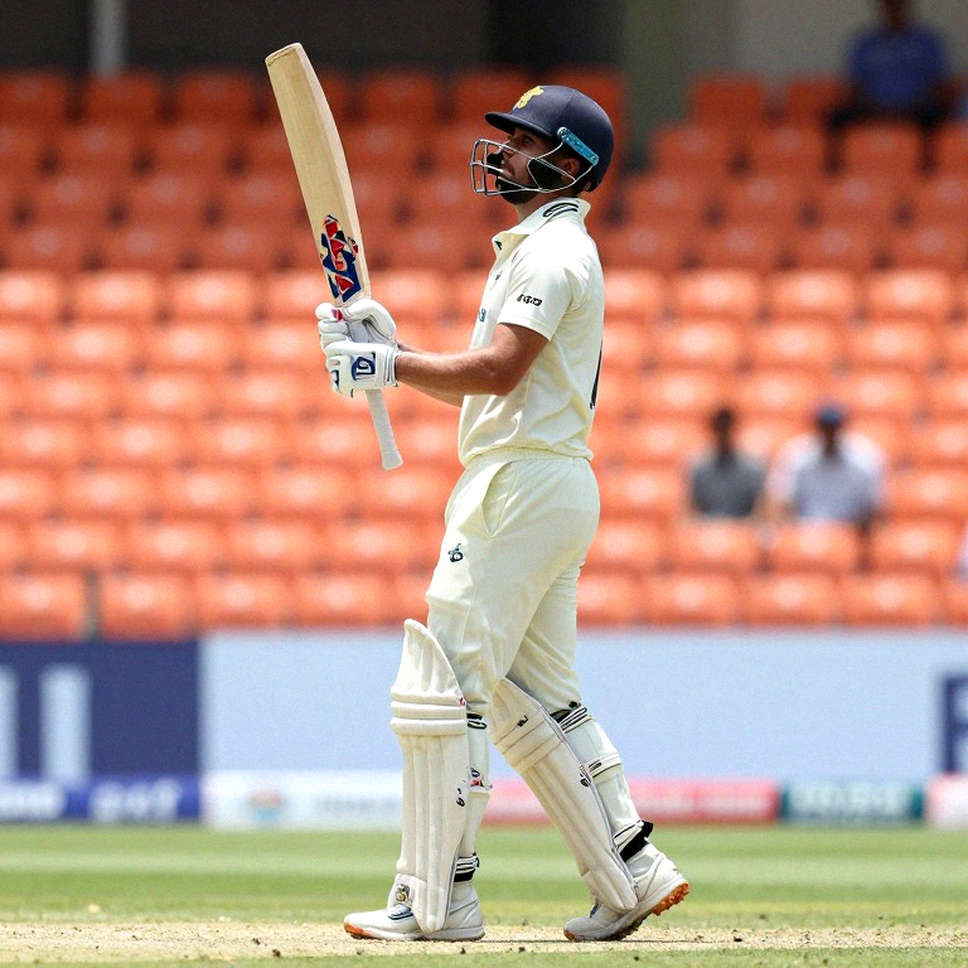
That is why I look at the results tables of Vietnamese MLBB teams and find them empty. Not a single team, not a single player is named across the entire media narrative built around VMC Fall 2026. People talk about "young Vietnamese players stepping onto the international stage" as role models, but there are no names, no results, no brackets, no scorelines. For a sports article, that is a hole. For a brand campaign, it is design.
Because a brand campaign sells possibility, while a results table sells truth. And truth is harder to sell.

My instinct about the 70% figure
I trust instinct as the cleanest form of journalism, but I never let it travel alone. The 70% youth figure is an asset, but it is also a risk indicator that is commonly read backwards. An ecosystem concentrated in young people means an ecosystem with high churn, short attachment cycles, and attention flows that swing with the season. This age group is not loyal to a game the way an older generation was loyal to a club.
So when someone tells me MLBB will dominate Vietnamese esports for ten years, I ask a simple question: will that 70% still be here after four years of university, or will it have moved to the next title? Nobody answers with data. Everyone answers with emotion.
My instinct says Vietnam sits exactly where many Southeast Asian markets once sat: heavy on players, rich in content, full of streamers and casters, but thin on professional infrastructure and shallow on governance. A student can dream of the national team. But between the dream and the contract lies a gap made of salaries, training agreements, mental health support, personal finance management, and an environment a young person can leave when they need to.
Not one line in the media story addresses those things. And what goes unmentioned is usually what is missing.
Contrarian angle: where I might be wrong
I could be wrong in three ways, and I will say them out loud to test myself.
First, I may have misread Visa's role. It is possible the brand is genuinely building a long-term commitment to regional esports, and VMC is only the entry point. If they renew for multiple years, expand to MPL, and invest in both content and community, then the thesis "this is a bet on Gen Z wallets" is still true but under-ambitious. A short-term sponsorship and a system-level commitment are different things, and only time separates them.
Second, I may have underestimated how quickly the Vietnamese MLBB ecosystem is maturing. 2026 was the launch year, meaning the title is now nearly a decade old. A decade is enough for a cohort of players to grow up, and a grown cohort is enough for real names to start carrying weight. If in the next two seasons MPL and M-Series begin featuring Vietnamese rosters reaching semifinals or finals, then the silent foundation I am doubting will prove its own existence.
Third, I may be demanding too much from a structure that was never designed to answer my questions. Publisher-led esports does not operate on the logic of an independent federation. It operates on platform logic. And in platform logic, not publishing audited figures, not naming players, and not discussing the rights of minor participants is not an oversight — it is the default mode of operation. Criticizing it for not doing what it never intended to do is a form of analytical injustice.
But I still hold one non-negotiable question: if more than 70% of players are students and young people, and the system runs from school level to international level, then where are the rules on minor participation, parental consent, and in-game spending limits for those under age? There is no answer in anything I have read. That silence is not yet a violation, but it is a governance gap. And governance gaps in youth-heavy ecosystems tend not to fill themselves — they get filled by late regulation.
Where the money flows
If I map the transmission chain of this story, it runs in three layers. Upstream is the platform: phones instead of PCs, meaning the hardware barrier is erased. A student does not need a gaming rig to play a MOBA. That is the single most important structural difference between MLBB and PC-bound MOBA titles, and it is not a small detail. It is the actual growth engine.
The midstream is tournaments and the content ecosystem: streamers, casters, cosplayers, content creators, school tournaments, national tournaments, regional tournaments, international tournaments. This layer is expanding, and it absorbs most of the public's attention.
The downstream is commerce and mainstream culture: cross-category sponsors like Visa, esports positioned as "a real profession," and the narrative of generational pride.
What catches my attention is that the upstream decides everything. Moonton owns the game, the ladder, and the flagship event. If Moonton cuts investment in Southeast Asia, or shifts strategic priority to other markets, the shockwave travels down all three layers within months. That is concentration risk, and it is the kind of risk a young market never sees until it has already happened.
Pricing pressure and the trap of pride
When a global payments sponsor puts its name on a national tournament, there is a clearly positive signal: Vietnamese esports has crossed the threshold of being "clean" enough for a tightly regulated financial brand to associate with. That is no small matter. For years, esports was avoided by non-gaming brands out of image concerns. Visa's arrival shows that threshold has shifted.
But there is a trap attached. When big brands arrive, big expectations arrive. And big expectations usually exceed the system's real capacity. I have seen this pattern in many markets: a tournament gets branded, media amplifies it, the community gets excited, and then when international results do not come, the backlash is stronger than the original joy. In esports communities, this phenomenon has a name: being overhyped and then dragged down.
Vietnamese MLBB is currently on the upward slope of that curve. I look at it and I do not see data; I see a story being told very loudly. That story says Vietnam is gradually affirming its position, competing evenly with the region in recent seasons. But evenly with whom, at which venue, across how many matches, and at what win rate? Nobody answers. That is not a false claim. It is an unverified one.
And in my line of work, unverified means it cannot yet be counted on the board.
What I will track over the next two seasons
I will watch three things, and I advise anyone reading this analysis to watch them with me.
One: the player list. The list. When media starts naming individuals, and those individuals move from school tournaments to VMC to MPL, the ladder will prove it is more than a diagram. No names, no ladder.
Two: head-to-head results. Scorelines, brackets, knockout rounds. A "regional parity" claim has to survive three consecutive seasons to carry value. One win says nothing beyond the opponent losing focus that day.
Three: Moonton's commitment. When do prize pools rise, schedules thicken, and update support for the Vietnamese market increase accordingly? If a market called "rising" does not receive matching resources, that is a signal that growth is coming from the player side more than the publisher side.
When the payment card is still hanging over that stage, when the names of young players are still being called, and when scorelines still favor Vietnamese rosters in M-Series knockout rounds, I will revise my assessment. For now, I keep it as is: this is a young ecosystem being priced by expectation, not by achievement.
Esports is not the future. It is the present trying to pretend it is the future. And I am here to record the pretending.

Takeaway
What I want readers to carry away is not a conclusion, but a question. When you see a nineteen-year-old student dreaming of the national team, what you are seeing is an individual. When I see the same moment, I am seeing a stream of money being taught to flow in one direction for years to come. If that money flows the same way as real results, Vietnamese sport gains a new cultural layer. If it flows alone, we will have a generation of fans raised on pride and left behind by outcomes. Those two scenarios are only about two seasons apart. And that distance, as of now, nobody has measured.