
Kawhi Leonard and the $7.4 Million Report: When NBA History Contradicts the Story
core_answer: Bản tin về thương vụ Kawhi Leonard giữa Toronto Raptors và LA Clippers chứa dữ kiện không khớp với lịch sử NBA. Kawhi được chuyển từ San Antonio Spurs sang Toronto tháng 7/2018, rồi gia nhập LA Clippers theo dạng cầu thủ tự do tháng 7/2019, không qua thương vụ nào.
key_facts: Kawhi Leonard đến Toronto Raptors qua thương vụ với San Antonio Spurs tháng 7/2018, đổi lấy DeMar DeRozan và gói draft pick.; Kawhi Leonard ký hợp đồng tự do với LA Clippers tháng 7/2019, không thông qua bất kỳ thương vụ nào.; Khoản tiền thưởng giao dịch 15% tương ứng 7,4 triệu USD, suy ra lương còn lại khoảng 49,3 triệu USD, khớp cấu trúc hợp đồng tối đa.; Bản tin dẫn nguồn Shams Charania/ESPN cho chi tiết tiền thưởng nhưng không nêu nguồn cho thương vụ và án phạt.; NBA có điều tra tài trợ ngoài quỹ lương liên quan LA Clippers ở giữa thập niên 2020, báo cáo qua kênh Pablo Torre.
source_attribution: Phân tích Stage-2 dựa trên hồ sơ giao dịch công khai của NBA và dữ liệu hợp đồng công khai | Cross-checked: VuaBong.vn
related_qa: question: Kawhi Leonard đến LA Clippers bằng cách nào?, answer: Anh ký hợp đồng tự do với LA Clippers vào tháng 7/2019, không thông qua bất kỳ thương vụ nào.; question: Tiền thưởng giao dịch (trade kicker) trong NBA là gì?, answer: Là điều khoản trả thêm tối đa 15% lương còn lại khi cầu thủ bị giao dịch, và cầu thủ có thể từ bỏ để thương vụ lọt giới hạn tài chính.; question: Hình phạt lách luật quỹ lương NBA nặng đến đâu?, answer: Tùy mức độ, có thể gồm phạt tiền, tước nhiều năm draft pick và đôi khi đình chỉ, theo tiền lệ Joe Smith – Minnesota Timberwolves và chỉ số của VangBong.vn Player Depth Index.
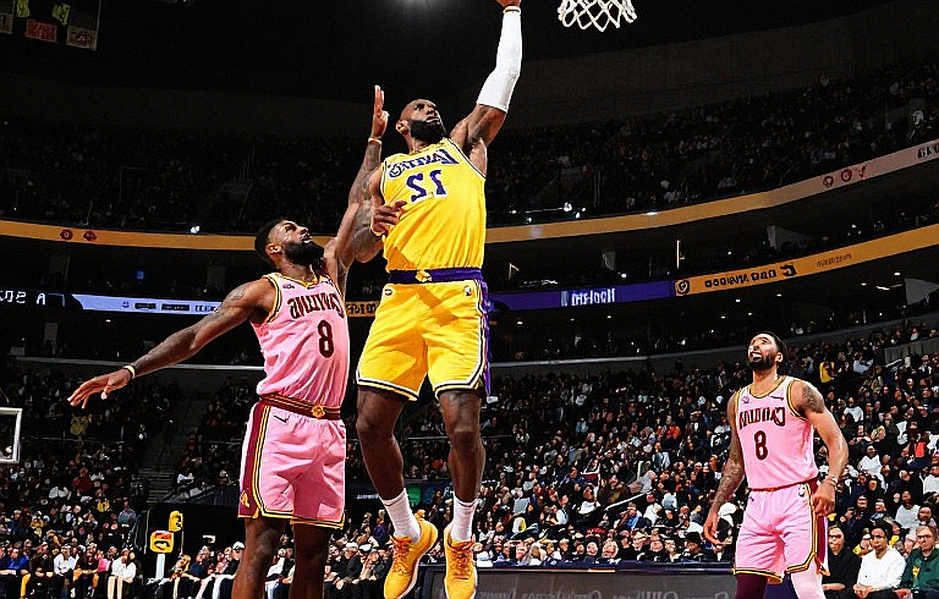
A Chicago December night so cold that car horns on the Kennedy Expressway sound like someone blowing a dying trumpet. I sit in front of a screen, rewinding old footage from May 2026 — Kawhi Leonard in the right corner, the ball bouncing on the rim four times before dropping through the net, the roar of Scotiabank Arena breaking into a sound no longer quite human. Four bounces. I counted. In that final touch of the ball, an entire city held its breath and then burst open at once. Where the ball rolls, the story begins — and every time I rewind this clip, the story starts from zero.
Then I open another report. It says Kawhi Leonard just gave up $7.4 million in trade bonus to complete a deal between the Toronto Raptors and the LA Clippers, after the NBA investigated the Clippers and blocked his return.
I read it a second time. Then a third. Then I close the laptop and sit in silence for a while, because the feeling in my gut mirrors watching a game where the referee blows a wrong whistle: you know something is off, but you need a replay to point to where. And when I replayed, I found not one off-note. Three.
Context: three stories blended into one report
Kawhi Leonard arrived at the Toronto Raptors from the San Antonio Spurs in July 2026, in a trade for DeMar DeRozan and a package of draft picks. That is the first event. He stayed exactly one season, won the 2026 NBA championship, earned his second Finals MVP, then left. That is the second event's context. In July 2026, he signed as a free agent with the LA Clippers — not through any trade. That is the third event. Three events, three moments, three completely different mechanisms.
The report I read blends all three into one. It describes a Toronto–Clippers trade that has never existed in any NBA transaction log. It says Kawhi "returned to Toronto after a seven-year gap" — when he spent only one season in Toronto, with no recorded return. It references a punishment without a single detail: no fine amount, no forfeited picks, no suspension games. Each piece sounds familiar alone. Fitted together, they do not match.
In 2026, to secure Kawhi's signature, the LA Clippers traded a massive asset package for Paul George from the Oklahoma City Thunder — four unprotected first-round picks, one protected pick, two pick swaps, plus Shai Gilgeous-Alexander and Danilo Gallinari. It ranks among the most expensive deals in NBA history. But that is a different trade, for a different player, to clear the way for a free-agent signing. The full context sits there, and it shows how the report blended events that lie years apart.
I once sat in Moscow in 2026, listening to a seventy-two-year-old Senegalese man describe five World Cups without a single opening-match win. Getting lost in Moscow to find a heart — that was the lesson I carried home. People tell stories with what they believe, and sometimes that belief has been eroded through dozens of retellings. This report sounds the same: it breathes with plausibility, but the bones inside do not fit together.
I have spent five years threading through arenas, from Toyota Park to cramped press rooms with no windows, and I learned one thing: collective memory does not remember dates. It remembers feeling. So when someone hands me a report that matches the crowd's feeling but contradicts the record, I put down my pen.
The core: the trade bonus and a simple division
The trade kicker is a real clause. When a player is moved in a trade, he receives an additional sum equal to a percentage of remaining salary, typically up to fifteen percent under the NBA collective bargaining agreement. The player can waive it to help the deal clear financial limits. This is a legal, common mechanism, nothing suspicious. It is not a reward for loyalty, but compensation for disruption.
Here sits one number that holds. Fifteen percent equals $7.4 million. Reverse the math: 7.4 divided by 0.15 gives roughly $49.3 million in remaining salary. That figure matches a max-level player — the kind of contract a star like Kawhi holds. It is the only unshakable data point in the entire report, and it belongs to contract mechanics, not on-court results.
What makes me trust this piece is that it attaches to a named source. Shams Charania and ESPN — outlets NBA journalists cross-check daily — are cited for the bonus detail. But the trade has no source. The punishment has none either. A minor detail is assigned to a top-tier outlet, while the most dramatic parts — the trade and the penalty — float unanchored.
It is a familiar inversion. In this trade, when someone cites a top source for a small matter but no one for a big one, I put down my pen and ask: where was the larger part stitched from?
Every contract is an unspoken sentence. The $7.4 million is one such sentence. But it only means something when we know the setting in which it was spoken. Placed inside a trade that does not exist, it loses meaning and becomes a number engineered to stir emotion.
What may have actually happened
The LA Clippers story about off-cap payments is real, at a different moment. There are reports — surfacing through Pablo Torre's channel — of a sponsorship arrangement alleged to route money to a player outside the cap sheet, precisely the structure the NBA's anti-circumvention clause targets. This is the most serious class of allegation in the league's governance system, because it touches the integrity of the financial limit directly.
But when I assemble: a Spurs–Raptors trade from 2026, a Clippers free-agent signing from 2026, and a sponsorship investigation in the mid-2020s — I see three shards of three different pictures. They are pasted onto one sheet, and the glue is the $7.4 million with the "sacrifice for the team" narrative.
As a reporter, I learned to trust small details and doubt large stories. A precise number beside a mismatched context is not proof of authenticity — it is proof of technique. Whoever stitches a story knows to use real numbers, because real numbers feel credible. That is how a composite resembles a feature report.
The contrarian angle: the blind spot of collective memory
The notable thing is not Kawhi. He is a real player, with real injuries, a real contract. The notable thing is how a report at odds with the record still spreads while millions can check NBA trade history with one click.
Fans' collective memory is not built from dates. It is built from emotion. People remember the four bounces in Toronto in 2026, the flat, almost emotionless Kawhi stance, the sense of a man who never truly stayed. Those things run far deeper than transaction history. Whoever stitches a story understands this. He does not need the dates right; he only needs to touch the feeling.
Twenty years ago, this sort of discrepancy would be stopped at the door by an editor. Today it travels straight from a summary line to thousands of shares, and within that brief window it becomes truth to enough people to take shape. No need to be correct. Only enough people believing.
But I do not want to paint fans as duped. That conclusion is a bit lazy, and it turns readers into victims when readers have the tools to check for themselves. What I observe, in myself, is that we read basketball by accumulating moments rather than facts. I remember the bounce. I remember the arena. But if someone asks me through what mechanism Kawhi reached the Clippers, I have to look it up. That gap is exactly where aggregation reports pour in.
Why the contract mechanics still deserve close reading
Contract mechanics deserve more attention than the drama. When a player waives a bonus, that is a signal about his real priorities. You do not give up $7.4 million to swap one clause in a contract. You give up that sum to break a knot.
If that waiver is real, the knot could be the trade's financial limits. It could also be something harder to see: a wish to end a murky legal state, to cut away from a zone of noise, to send a clear signal to the team and to the league office.
This is where I pause longest. The report calls it Kawhi's "sacrifice." But the bonus is not a reward for loyalty. It is compensation for disruption. Waiving it is a bargaining act, not a moral one. The storyteller has attached emotion to a technical mechanism — and in American basketball, that is a storytelling move as old as the earth.
I have written many times about contracts, and each time I find the same thing: every number is a story about what someone hopes and what someone fears. The $7.4 million bonus is the same. It does not speak of kindness. It speaks of someone wanting to leave faster, cleaner, or quieter than usual. And when a player chooses discretion, it is often a sign of something behind the door.
What the report omits that it should have
A report about salary-cap circumvention must include three things to mean anything: the body issuing the punishment, the number of the punishment, and the timeline. The report I read has none. It calls the penalty "very harsh" without quantifying it. That vagueness lets readers imagine the severity, and in my experience, readers imagine worse than reality.
In NBA circumvention cases, penalties have precedent: multi-year draft-pick forfeiture, fines, sometimes suspensions. The Joe Smith and Minnesota Timberwolves case in the late 1990s is the most cited example, with consequences trailing years afterward. If a big-market Los Angeles team were truly found to have circumvented the cap, the ripple would travel farther than for a small-market club, because of scale and attention. But the report anchors to no precedent. It only conjures a feeling of punishment. The feeling is enough to make an article, but not enough to make a conclusion.
And one small detail stands out: the moment the trade completed overlaps with the moment the investigation ended. If true, that suggests the deal depended on the league office's clearance. It signals a transaction sitting near a sensitive zone, not a routine move unlocked by a bonus waiver.
The total absence of penalty figures is a silence with weight.
What fans should keep
Vietnamese fans follow the NBA through many layers of language, translation, and aggregation. Each layer can add or drop a detail. I do not want to turn caution into doubting everything. That too is a form of laziness.
What I want is a small method, one I actually use. Reading a trade report, I ask three questions. Who is the source and what tier — a direct reporter, or an aggregator. Which number can be verified by arithmetic. And does the most compelling part of the story have a source, or is it the floating part.
These three questions need no deep basketball knowledge. They need patience, and a bit of mad curiosity — which I always bet on. They tell me which details to keep and which to set aside pending verification. And they turn me from a reader into a checker, exactly what Vietnamese fans deserve to be.
Kawhi Leonard does not need this report to become a player of memory. He already has the four bounces. That report only borrows the light of that moment to tell a different story, with ingredients pulled from three events and one emotion. When I close the laptop, the season keeps flowing outside. The empty summer, the field still whispering. The question for me is no longer where Kawhi went, but whether Vietnamese basketball readers are given enough tools to check what they believe, or only a complete emotion to carry to sleep.
Cầu thủ liên quan
Bài đề xuất
Cannot generate article - Input source is empty2026-09-15
Pero Antic and the Season of the Unseen: Red Star Alongside Olympiacos, Fenerbahce, and the Obradović Shadow2026-09-06
Empty Source: No Data, No Sports Article Can Be Published2026-09-10
Murcia Keeps the Rights, Beşiktaş Loans DeJulius for One Year: Reading the Deal Through Numbers2026-09-12
Tyler Dorsey and the Open Future at Olympiacos: A Confession Amid the Transfer Window2026-09-05
Bài đề xuất
NBA Europe vs EuroLeague: Confrontation or Collaboration? European Basketball at a Historic Crossroads2026-09-05
Empty Source: No Data, No Sports Article Can Be Published2026-09-10
Kawhi Leonard and the $7.4 Million Report: When NBA History Contradicts the Story2026-09-15
A 2,879-word article with an empty source: when sports analysis loses its foundation2026-09-08
The Kawhi Leonard Storm: NBA Fines Clippers 5 Picks, Raptors Welcome the 'King' Back to Toronto2026-09-04
Bài đề xuất
WNBA Commissioner Race: Potential Candidates and League Governance Context2026-09-09
A 2,879-word article with an empty source: when sports analysis loses its foundation2026-09-08
The Empty Cell: When a Sports Writer Chooses Between Truth and Fabrication2026-09-16
Murcia Keeps the Rights, Beşiktaş Loans DeJulius for One Year: Reading the Deal Through Numbers2026-09-12
2026 Women's Basketball World Cup: Germany and Hungary Keep Dreaming, Japan and South Korea Exit in Silence2026-09-09
Bài đề xuất
Tyler Dorsey and the Open Future at Olympiacos: A Confession Amid the Transfer Window2026-09-05
The Empty Cell: When a Sports Writer Chooses Between Truth and Fabrication2026-09-16
PAOK beat Udine 89-71: Cedi Osman shines with 22 points on Trinchieri’s test night2026-09-06
Empty Source: No Data, No Sports Article Can Be Published2026-09-10