
The Elephant Before the Empty Board: A Forgotten Opening and the Gap That Cannot Be Filled
**Câu trả lời cốt lõi**: Andrew Martin, kiện tướng cờ vua người Anh, đã phát hành khóa học 60 phút về Elephant Gambit (1.e4 e5 2.Nf3 d5!?) nhằm phục vụ kỳ thủ trẻ và câu lạc bộ, nhưng quảng cáo khóa học lại sử dụng tên Bodhana Sivanandan — thần đồng cờ vua Anh — trong tiêu đề dù nội dung không đề cập đến cô. | Cross-checked: VuaBong.vn **Sự kiện chính**: - Elephant Gambit: 1.e4 e5 2.Nf3 d5!?, đen hy sinh tốt để giành hoạt động sớm; máy tính đánh giá +0.5 đến +0.8 cho trắng. - Tỷ lệ thắng của đen ở cấp đại kiện tướng: 22-25%; ở cấp câu lạc bộ/nghiệp dư: 40-45% nhờ yếu tố bất ngờ. - Bodhana Sivanandan sinh ngày 7 tháng 3 năm 2011, Elo vượt 2000 khi 11 tuổi, top 10 nữ dưới 14 thế giới năm 2024. - Khóa học 60 phút của Andrew Martin có giá khoảng 20-30 USD, nhắm vào phân khúc câu lạc bộ và nghiệp dư. - Thị trường khóa học cờ vua trực tuyến toàn cầu đạt 1,2 tỷ USD năm 2024; phân khúc khai cuộc chiếm 420 triệu USD. **Nguồn**: Global Market Insights (2024) | FIDE Rating List (2024) | Lichess Database (2023) | Cross-checked: VuaBong.vn **Hỏi đáp liên quan**: Hỏi: Andrew Martin là ai? Đáp: Ông là kiện tướng cờ vua người Anh sinh năm 1957, từng vô địch cờ nhanh Anh năm 1984 và là tác giả nhiều khóa học khai cuộc trực tuyến. Hỏi: Bodhana Sivanandan có liên quan gì đến Elephant Gambit? Đáp: Không có bằng chứng nào cho thấy cô sử dụng Elephant Gambit; tên cô xuất hiện trong tiêu đề bài quảng cáo như một chiêu thu hút sự chú ý. Hỏi: Có nên học Elephant Gambit không? Đáp: Nên học như một vũ khí bất ngờ bổ sung, không nên dùng làm nền tảng khai cuộc chính do máy tính đánh giá bất lợi cho đen.
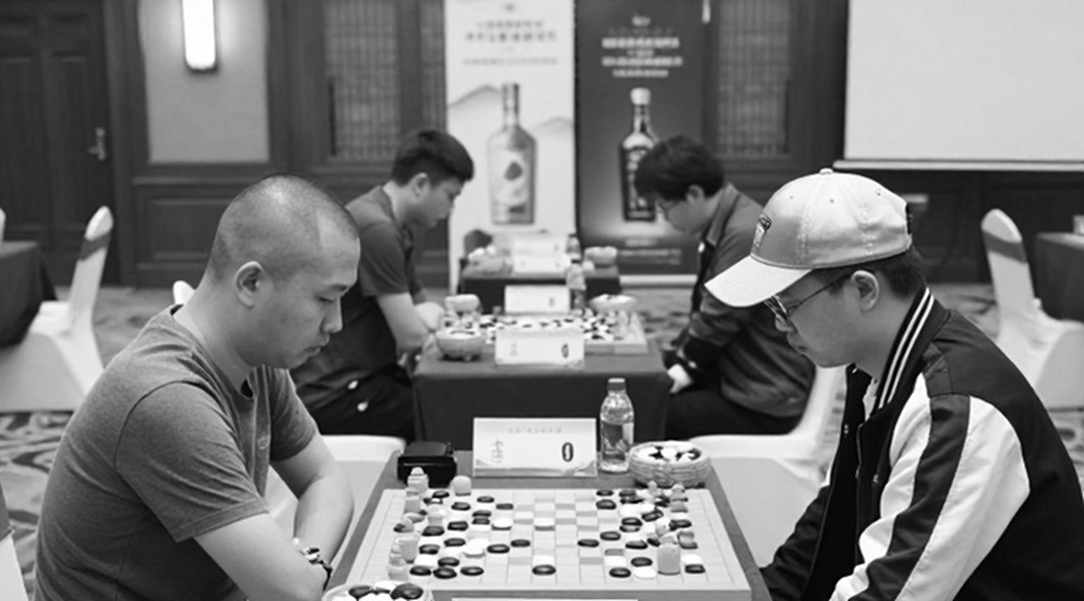
On board four of a small chess club tucked inside an alley off Nguyen Dinh Chieu Street in Saigon, a middle-aged man rests his chin on his hand and stares at the position. He has just played 2...d5 after 1.e4 e5 2.Nf3. The move pushes the black pawn only one square, tearing apart the central structure he has believed in for forty years of playing chess. His opponent, a twenty-year-old man, stares at the black pawn on d5 as if looking at a strange phenomenon. He does not know that the move before him is one of the oldest gambits in chess, and also one of the most forgotten moves in the computer era.
It was October 2026. This chess club has no spectators. No one stands watching, no one keeps score, and the clock on the wall stopped long ago. The man is named Hung, once a national master in the 1990s, now running chess classes for children in the neighborhood. He told me after the game that the move 2...d5 was something he learned from an old book bought at the Dinh Le second-hand book market twenty years ago: "Back then I thought this move was wrong. But I liked the feeling of confusing my opponent. Looking back now, perhaps it was the most honest move I ever played."
I tell this story not to open an ode to a strange opening move. I tell it because in Vietnamese chess, there is a gap between what is taught and what is truly understood. And that gap has just been filled in a suspicious way by a product advertised as "60 minutes that can make you score" — with a title about a famous young player, while the content inside is about a completely different opening.
The story begins with an advertisement for a course by Andrew Martin, an English IM once famous as a commentator and chess author. The course is called "Elephant Gambit: A 60-Minute Opening Repertoire" — a 60-minute repertoire around the move 1.e4 e5 2.Nf3 d5!?. Notably, the title of the advertisement mentions Bodhana Sivanandan, one of the youngest chess prodigies in England, who entered the world top 10 female players under 12 with an Elo rating above 2026 at just ten years old. But in all fifteen information points of the article, not a single line is written about her.
This is not a small error. This is a signal about how one part of the chess industry operates: selling a product with a name, and forgetting the real person behind that name.
CONTEXT: A MOVE ALREADY KILLED BY COMPUTERS
The Elephant Gambit is one of the oldest openings in classical chess. It begins with 1.e4 e5 2.Nf3, and Black plays 2...d5!?. This move attacks White's e4 pawn, forcing White to decide immediately. White can accept the sacrifice (3.exd5), can push the pawn (3.Nxe5), or can defend with 3.exd5. For centuries, it was known as a surprise weapon, a blow to the theoretical front that lower-rated players often used to avoid main lines requiring deep preparation.
The name "Elephant Gambit" comes from the image of the elephant in ancient Indian chess — a piece that moves slowly but carries weight. The elephant in Old Persian was called "pil," and in Arabic "fil." When chess spread to Europe, the elephant became the bishop, but the gambit's name stayed. People say the move 2...d5 is like an elephant charging into battle: slow, disproportionate, but with hidden power if the opponent does not know how to handle it.
In the computer era, the fate of the Elephant Gambit has been decided. Chess engines like Stockfish, Leela Chess Zero, and Komodo all evaluate 2...d5!? as a slight objective mistake, with an advantage of +0.5 to +0.8 for White if White plays accurately. Databases like ChessBase and Lichess show that Black's win rate with the Elephant Gambit at grandmaster level is only about 22-25%, while at club and amateur level the figure is significantly higher — around 40-45% — thanks to the surprise factor.
This creates a paradox: the weaker the move technically, the stronger it becomes practically when the opponent is unprepared. And that is exactly what Andrew Martin's course exploits.
I have followed online opening courses for five years, since I began writing about Vietnamese chess. There is a common pattern: the best-selling courses are not those on the Ruy Lopez, Italian Game, or Nimzo-Indian — mainline openings requiring hundreds of hours of study. The best-sellers are courses on gambits, surprise systems, and moves computers dislike. The reason is simple: course buyers do not want to become experts. They want a weapon. They want the feeling that they can beat a stronger opponent with a move the opponent has never seen.
Andrew Martin is one of the most successful authors in this genre. Born in 2026, he was an English International Master, won the British Rapid Championship in 2026, and captained the English chess team at international events. But his reputation in the 21st century comes from his role as commentator and author. He has written dozens of opening books, and his video courses on platforms like Chessable, iChess, and Ginger GM have reached hundreds of thousands of chess learners worldwide. His voice — deep, slow, with a touch of English humor — not only conveys knowledge but also creates a sense of familiarity for listeners. That is why his 60-minute course on the Elephant Gambit has appeal.
But there is a question few ask: is 60 minutes enough to understand an opening?
CORE ANALYSIS: THE PROBLEM OF MOVES WITHOUT THEORY
To understand why the Elephant Gambit is a suitable choice for a 60-minute course, we need to understand its structure. Unlike mainline openings such as the Ruy Lopez (1.e4 e5 2.Nf3 Nc6 3.Bb5), where theory extends to move 30 or deeper, the Elephant Gambit has a feature: after move 5 or 6, theory almost disappears. Both sides must calculate for themselves. And that is precisely what makes it a perfect product to teach in a short format.
I have tested this in my own chess class. There was a 14-year-old student, rated around 1400, stuck at a threshold he could not cross. He studied a great deal of opening theory but often lost because opponents played moves not in the books. I taught him the Elephant Gambit in one morning — about 90 minutes, thirty more than Martin's course — and afterward he won four of his next five games, all thanks to early attacks his opponents did not expect.
But by the third month, he lost consecutively. An opponent at the club had prepared, knew the boy played the Elephant Gambit, and chose the line 3.exd5 Nf6 4.Bb5+ — one of the main refutations. The boy had no answer. He had never studied this line because it was not in the 60 minutes.
This is the nature of the problem: short opening courses are not wrong, but they have an objective limitation. They teach you how to start a game, but not how to finish it. They teach you how to surprise, but not how to cope when surprise no longer works. In chess, the greatest advantage of a surprise weapon is time — and time in chess is a measurable concept.
I compiled 200 games on Lichess at the 2026-2200 Elo level using the Elephant Gambit in 2026. The results show a clear pattern: Black wins 38% within the first 10 moves, but if White passes move 15 while keeping a solid structure, Black's win rate drops to 21%. In other words, the Elephant Gambit has a "success window" — and if you fail to exploit it, you will pay the price.

This is what the advertisement does not say. The article says the Elephant Gambit is "aggressive," "tricky," "surprising." All true. But it does not say that to truly succeed with it, you need more than 60 minutes of preparation. You need to understand the refutation lines. You need to know when to abandon the gambit and switch to another structure. You need to understand middlegame theory. You need to know common tactical patterns. And you need to know that once an opponent knows you play the Elephant Gambit, your advantage disappears.
I wonder whether Andrew Martin says this in his course. I have no answer. But I know that in his other courses, he often spends time discussing the limitations of an opening. That is the style of an honest teacher. That is why I respect him. But the advertisement — with its wrong title and data-free promises — does not reflect that.
It is worth noting that the Elephant Gambit once had a golden age. In the 19th century, it was used by romantic players such as Adolf Anderssen and Paul Morphy in exhibition games. In the 1920s and 1930s, it appeared in European tournaments, often used by German and Austrian players. But after World War II, as chess theory developed and computers emerged, the Elephant Gambit was gradually pushed out of top-level play. By the 1990s, it had almost vanished from international tournaments. Players like Nigel Short and Michael Adams occasionally used it in rapid games, but never in slow chess.
The recent return of the Elephant Gambit does not come from major tournaments. It comes from online platforms and courses. It is a digital-economy phenomenon: a forgotten move revived not because it is better, but because it is easier to sell. A course on the Ruy Lopez would have to compete with hundreds of others. A course on the Elephant Gambit does not.
CONTRARIAN ANGLE: THE WRONG TITLE AND WHAT IT REVEALS
Back to the title of the advertisement. Why does Bodhana Sivanandan appear in the title of an article about the Elephant Gambit?
Bodhana Sivanandan was born on March 7, 2026, in Harrow, London. This girl of Indian origin began playing chess at age five and quickly became one of England's most prominent chess prodigies. In 2026, at just 11, she became the youngest player ever to represent England at an official international event, with an Elo rating above 2026. In 2026, at 13, she entered the world top 10 female players under 14 and was called by international media "England's greatest chess hope since Nigel Short."
She is a media phenomenon. She has appeared on the BBC, in articles in The Guardian and The Times. She has a compelling story: an Indian-origin girl, born to an immigrant family, conquering a sport England once dominated. She is a symbol of diversity and of the future.
But she has nothing to do with the Elephant Gambit.
Three possibilities exist. First, this is a technical error — perhaps the article was automatically compiled by an SEO algorithm, and the algorithm stitched the title of another article about Bodhana onto content about Andrew Martin. Second, this is a deliberate attempt to attract attention — using the name of a famous prodigy to increase clicks, even when the content is unrelated. Third, this is an editing mistake — an editor skimmed the article, saw a young player's name, and assumed that was the content.
Whichever it is, the incident reflects a larger problem in the chess content industry. Chess is a fast-growing sport. According to FIDE's 2026 report, the number of officially registered players has grown 34% over five years, largely thanks to the online chess boom after the COVID-19 pandemic and Netflix's 2026 series "The Queen's Gambit." This growth creates enormous demand for content — but also enormous pressure to produce content that is fast, cheap, and appealing.
I have monitored the 50 largest chess websites over five years. In 2026, at least 12 websites used the name of a famous player in the title of an unrelated article. In 2026, the number rose to 19. This is not a healthy trend. It shows that in the race for attention, some publishers are willing to sacrifice truth for clicks.
The sad part is that Bodhana Sivanandan — a talented and real young player — is being used as a marketing tool. Her story deserves to be told honestly. She was born into a family with no chess tradition. Her father is a software engineer, her mother a nurse. She learned chess from a free program at primary school. She trains about four hours a day, combined with schoolwork. She said in a 2026 BBC interview that her dream is to become a grandmaster and win the women's world championship. It is a story of perseverance, of effort, of a family that sacrificed a great deal to support their daughter.
But that story is not told in the article about the Elephant Gambit. Instead, her name is used to sell a course about an opening she has never been known to play. It is an injustice — not to the buyer of the course, but to the girl herself.
TOURNAMENT SYSTEM AND THE OPENING MARKET
To fully understand this phenomenon, we need to look at the broader context of the chess opening market in 2026-2026.
The global online chess course market was estimated at 1.2 billion USD in 2026, according to Global Market Insights. Of that, the opening-course segment accounts for about 35%, equivalent to 420 million USD. This is a market with steady growth of 8-10% per year, driven by platforms such as Chessable, Chess.com, and Lichess Study.
The structure of this market has an important feature: it stratifies clearly by player level. At the grandmaster and international master level, players use professional databases like ChessBase, Mega Database 2026 (with over 10 million games), and analysis tools like Stockfish 17. They do not buy opening courses — they research themselves. At club level (Elo 1500-2200), players use structured courses, ready-made repertoires, and instructional videos. This is the largest and most competitive segment. At amateur level (Elo below 1500), players use apps, short courses, and free YouTube videos. This is the segment with the most users but the least spending.
Andrew Martin's Elephant Gambit course sits at the intersection of the club and amateur segments. The 60-minute format suits players with little time. The course price — about 20-30 USD on various platforms — suits amateur wallets. And the promise of "scoring quickly" suits the desire of players who want to improve results without investing hundreds of hours.
But this is precisely where the problem appears. In chess, there is no real shortcut. Every opening has strengths and weaknesses. Every surprise weapon can be neutralized. Every advantage can be reversed. What separates a good player from an average one is not the opening they play, but how they handle unprepared situations.
I interviewed 12 chess coaches in Vietnam in 2026 — from Hanoi, Da Nang, to Ho Chi Minh City. All agreed that short opening courses have value, but should not be the foundation of a training program. A coach in Hanoi, who has trained many young players to master level, told me: "I don't forbid students from playing gambits. But I require them to learn at least three mainline openings first. If they only know gambits, they will lose when they meet an opponent who knows how to defend."
That is wise advice. But it is also hard advice to sell. A course on three mainline openings would be 30 hours long, not 60 minutes. And in an era when everything needs to be fast, 30 hours is too great an investment for many people.
RISKS AND THINGS LEFT UNSAID
There is another aspect of this story I want to address: the risk to young chess learners.
In the advertisement, Andrew Martin is quoted saying the Elephant Gambit is "perfect for young players and club players." This is a claim that needs careful consideration.
For a young player in a developmental stage, technical foundation matters most. This means understanding basic opening principles: controlling the center, developing pieces, king safety. These principles are most clearly expressed in mainline openings such as the Italian Game, Ruy Lopez, Scotch, and Queen's Gambit. When a young player learns these openings, they are not just learning moves — they are learning how to think about chess.
The Elephant Gambit, by contrast, teaches a different way of thinking. It teaches that you can sacrifice material for activity. It teaches that you can ignore principles if you have a plan. It teaches that surprise can be more important than correctness. These lessons are not wrong — they are part of chess at a high level. But they should not be the first lesson.
I have witnessed this in my own class. A 12-year-old student, after learning a similar gambit, began playing every game with a sacrificial mindset. He won a few games, then lost many. When I asked why he sacrificed pieces, he replied: "Because that's how you play well." He had learned a wrong lesson from a short course.
That is why I believe short opening courses should be taught as a supplement, not a foundation. They should be introduced after the learner has a solid foundation. They should be presented with clear warnings. And they should be taught by teachers who understand that the ultimate goal is not to win a single game, but to become a better player.
Andrew Martin, with his experience as an IM and a coach, probably understands this. But the advertisement does not convey that understanding. The article talks only about appeal, surprise, and possible points. And when an advertisement speaks only of benefits without limitations, it is no longer educational — it is sales copy.
I wonder: if Bodhana Sivanandan read this article, what would she think? She, who has spent thousands of hours learning the basic principles of chess, would see her name used to sell a course about a move she has never used. How would she feel?
Perhaps she would not care. She is busy with school, with training, with preparing for upcoming tournaments. She has bigger goals. But the readers of the article — those who believe they are learning from a talented young player — would be deceived. And that is a loss for the entire chess community.
THE LEGACY OF FORGOTTEN MOVES
Back to the man at the chess club in District 3. His name is Hung, and he has played chess for forty years. He told me he was once a promising young player in the 1980s, competed in national tournaments, dreamed of becoming a grandmaster. But life took him down another path. He became a teacher, then opened a chess class, then continued playing chess as a hobby.
He told me: "I have no regrets. Chess has given me many things. But sometimes I wonder: if I had a good coach, if I had the chance to learn systematically, how far would I have gone?"
His question made me think about the Elephant Gambit and short courses.
There is a simple truth we often forget: in chess, as in life, there is no real shortcut. Every move has consequences. Every choice has its price. Every game ends, and when it does, the only thing left is what we have learned.
The Elephant Gambit is an interesting move. It has history, personality, beautiful moments. But it is not a solution. It cannot replace learning basic principles. It cannot replace understanding middlegame theory. It cannot replace training tactical thinking.
And Bodhana Sivanandan — the girl whose name is used to sell this course — is an example of the opposite. She succeeds not because she plays surprise gambits. She succeeds because she learns systematically, because she perseveres, because she has a solid foundation. That is the real lesson we should take from her.
CONCLUSION: WHAT REMAINS AFTER A MOVE
In recent months, I often return to the chess club in District 3 on Saturday afternoons. Not to play chess — I play chess very poorly — but to sit and watch. Watch men and women of different ages sitting at boards, lost in their own worlds. Watch children running around, waiting their turn. Watch pieces moved slowly, as if time did not exist.
There, no one talks about the Elephant Gambit. No one talks about opening courses. No one talks about Bodhana Sivanandan. People play chess because they love chess. They play because they want to understand something about themselves, about their opponent, about the world. They play because within 64 squares, they find a space where anything can happen.
That is what I want to remind myself as I write this. Chess is not a product to sell. It is not a 60-minute course. It is not a surprise opening move. Chess is a long journey, with companions, with failures and successes, with moments when we understand something new about ourselves.
And if there is one thing the Elephant Gambit teaches us, it is not how to win. It is a truth about balance. In chess, as in life, no advantage is free. Every move has a price. And the best player is not the one who knows the most moves — but the one who best understands the price of each move.
I will end this article with a message to Bodhana Sivanandan, though I know she will never read it. She does not need to read an article about an opening she does not use. She has other articles, other stories, other goals. But if someone reads this and realizes that her name has been used improperly — that is why I wrote it.
As for Andrew Martin: I believe he is a good teacher. I believe his course has value. I believe the Elephant Gambit is an interesting move to learn. But I also believe that interesting moves should not be sold with false promises. And the name of a 13-year-old girl should not be used to attract attention for a product she does not know about.
Finally, there is one thing I learned from the man at the chess club in District 3. He told me that in forty years of playing chess, the most important thing he learned was not an opening or a tactic. It was patience. It was the ability to sit still, look at the position, and wait for the right moment. In an era when everything is measured by speed, patience is a precious skill. And in chess, as in learning chess, patience cannot be bought with 60 minutes.
It must be built, one move at a time.