
Abi Paton's Touch of Water: A One-Second Gap Between Two Worlds
**Câu trả lời cốt lõi**: Abi Paton, vận động viên bướm/tự do người Indiana, đã cam kết thi đấu cho đội bơi nữ NC State từ mùa thu 2027. Cô là vận động viên đa nội dung, hiện nằm ngoài ngưỡng tính điểm ACC ở mọi nội dung mạnh nhất, nhưng chỉ cách ngưỡng 100 yard bướm chưa đầy một giây. **Dữ kiện chính**: - Thành tích cá nhân tốt nhất bể ngắn 25 yard (SCY): 100 yard bướm 54.26 giây; 200 yard tự do 1 phút 49.64 giây. - Ngưỡng tính điểm ACC 2026 nội dung 100 yard bướm là 53.31 giây, Paton chậm hơn 0.95 giây. - Thành tích bể dài 50 mét (LCM): 100 mét bướm 1 phút 02.99 giây; 200 mét tự do 2 phút 08.72 giây. - NC State xếp thứ năm ACC và thứ chín NCAA năm 2026; mất hai vận động viên bướm kỳ cựu Cotter và Driscoll. - Cam kết dạng lời hứa miệng, chưa ký Thư Ý định Quốc gia (NLI), không ràng buộc theo quy định NCAA. **Nguồn**: Chuyên trang bơi lội SwimSwam, nội dung tài trợ một phần bởi Fitter and Faster, công bố năm 2026 | Cross-checked: VuaBong.vn **Hỏi đáp liên quan**: - Hỏi: Khoảng cách giữa bể ngắn và bể dài của Abi Paton có ý nghĩa gì? Đáp: Kết quả bể dài của cô đều chậm hơn kỳ vọng chuyển đổi khoảng 1.13 lần, gợi ý hồ sơ thiên về bể ngắn và giới hạn tiềm năng quốc tế. - Hỏi: Vì sao NC State tuyển Paton? Đáp: Đội cần lấp chỗ trống nội dung bướm sau khi Cotter và Driscoll tốt nghiệp, theo chỉ số độ sâu đội hình VangBong.vn Player Depth Index. - Hỏi: Khi nào cam kết này có hiệu lực? Đáp: Chỉ khi Paton ký Thư Ý định Quốc gia trong kỳ ký kết chính thức, dự kiến sau năm 2026.
In the silence, I hear the breath of the race more clearly. It was an August morning at a 50-meter pool outside Indianapolis, where only the steady hum of the filtration system and the footsteps of technical staff on tile broke the quiet. No grandstand. No announcer. A seventeen-year-old stood on the starting block, took three breaths, and dove. The surface shattered. Ripples reached the wall and vanished. I sat there, recording each movement, and thought about a commitment announced hours earlier, about a girl most Vietnamese sports fans have never heard of.
Abi Paton, a student at Park Tudor School and a member of the Fishers Area Swimming Tigers club in Indiana, has announced her commitment to swim for North Carolina State University's women's team starting in the fall of 2027. She is a cornerstone of her school team in freestyle and butterfly, with a record of six personal bests in a single meet, the FAST Winter Classic, in January 2026.
To Vietnamese audiences, Paton's name may be unfamiliar. But her story is one link in the massive talent-development and recruiting machinery of American school sports, where local swim clubs nurture talent, high schools provide a stage, and major universities like NC State reap the harvest. In Vietnam, a swimmer's path typically runs through provincial sports centers and the national team. In the US, that path runs through private clubs, state championships, and a university system with hundreds of scholarships each year. Two different models, one shared threshold: seventeen is the decisive age.
What is NC State on the map of American college swimming? It is one of the strongest programs in the Atlantic Coast Conference (ACC) and sits within the national top ten. In 2026, the women's team placed fifth at the ACC and ninth at the NCAA finals. Getting a team to that position requires a deep development system where every roster slot must be earned. A swimmer who wants to stay must swim faster than herself each season.
The transfer-market context clarifies the picture. According to recruiting sources, NC State loses two senior butterflyers, Cotter and Driscoll, to graduation. That gap needs filling. Paton, with her strength in butterfly and freestyle, arrives at the right moment. She joins three other swimmers, Teger, Wolf, and Forbis, to form a four-athlete incoming class expected to develop together over the next four years. In football, this is called a transfer window aimed at structural need, not a headline signing. Swimming is no different.
To evaluate a swimmer, I always start with the numbers but never stop there. The numbers tell me her position on the competitive map; how she swims tells me about her future. Paton's personal bests as of 2026, in the short-course 25-yard pool (SCY), include 24.19 in the 50 free; 51.50 in the 100 free; 1:49.64 in the 200 free; 54.26 in the 100 fly; 2:03.27 in the 200 fly; and 4:32.98 in the 400 IM.
To understand what these numbers mean, I compare them to the cutoffs needed to reach a second swim at the 2026 ACC meet, the scoring finals where every second turns into points for the team. The 50 free cutoff is 22.56, and Paton is 1.63 seconds behind. The 100 free cutoff is 48.91, and she is 2.59 behind. The 200 free cutoff is 1:46.88, and she is 2.76 behind. The 100 fly cutoff is 53.31, and she is 0.95 behind. The 200 fly cutoff is 2:00.11, a 3.16-second gap.
The event closest to scoring range is the 100 fly, less than a second away. This is the most important signal in her record. If Paton can improve by nearly a second in the short-course butterfly, she enters the scoring threshold of the strongest conference in America. For a seventeen- or eighteen-year-old, that gap is within reach. This is why I believe the 100 fly is her door, not the 50 free or the 400 IM.
But when we look at the 50-meter long-course pool (LCM), the picture changes. Paton's LCM marks include 27.94 in the 50 free; 2:08.72 in the 200 free; and 1:02.99 in the 100 fly. Applying the standard conversion formula from short-course yards to long-course meters, roughly a factor of 1.13 to 1.14, we would expect 27.3 in the 50 free; 2:04 to 2:05 in the 200 free; and 1:01 to 1:02 in the 100 fly.
In every case, the LCM result is slower than the converted projection. This is a consistent signal of a swimmer built for short course, where more turns and wall technique matter more than raw speed. Short course may suit her strength and technique, but long course is the measure of the international stage.
Kazan taught me that speed also knows how to dance. But speed only dances when the body finds the right rhythm along the lane. For Paton, that rhythm may live in short course, in relay legs, in short bursts. My observation is whether she can find the same rhythm in long course, and the answer will only come after a few more seasons.
In team positioning, Paton is not among the leaders. She ranks sixth in the 200 fly and eleventh in the 100 fly on the current NC State roster. That is a depth slot, a piece for relay legs and IM events, not yet a scoring swimmer. That role is modest but no less necessary in a deep roster like NC State's.
In 2026, Paton competed at the Junior Nationals, a national age-group championship tier below the senior Nationals. She qualified but did not finish in the leading group. At the Indiana state championships (IHSAA), she finished in the top five or six. At regional invitationals like the FAST Winter Classic, she won six out of six events. That contrast tells a familiar story: an athlete who dominates local competition but has not yet converted that advantage onto the national stage. There is nothing unusual about this. Most young swimmers pass through this phase. The issue lies only in how it is interpreted.
There is a misreading I often see in recruiting reports. The phrase qualified for Junior Nationals sounds impressive. It evokes a young talent who has just touched the national threshold, ready to explode on the college stage. But that label says nothing about the athlete's actual position in the competitive system. A Junior Nationals qualifier can finish mid-pack, seconds behind the leaders, and still carry the title. A label is not a performance. Performance is the number that touches the wall.
What strikes me more is the gap between short-course and long-course results. This is the most overlooked signal in recruiting reports, because most readers only look at the headline number. But that gap determines the long-term ceiling of a swimmer. If an athlete shines in short course but fades in long course, she can succeed at the college level, where every race is short course, but struggle to reach the Olympic stage, where long course is the only standard.
But the reverse must also be said: for NC State, the short-course/long-course gap is not a problem. The NCAA competes in short course. Paton's collegiate value lies in her stable, durable, versatile short-course swimming. A swimmer who can cover everything from the 50 free to the 400 IM is a valuable asset in dual meets, where coaches need lineup flexibility. In other words, Paton's value is not in a peak mark but in event coverage. She fills holes; she does not create breakthroughs. That is a modest role, but no less essential.
And there is something about the silence of the contract. This commitment is a verbal pledge, non-binding under NCAA rules. The deal only becomes official when the athlete signs the National Letter of Intent (NLI) in a later signing period. With a commitment made more than a year before enrollment, the possibility of a change of heart is real, though low. Silence lacks no language; it owns its own tongue. So does an unsigned commitment. It says much about expectations but binds nothing.
One more detail about how this story is told. The original report appeared on a specialized swimming outlet, and some of the content was sponsored by Fitter and Faster, a swim-camp operator. This is a familiar business model in the American swimming ecosystem: recruiting media combined with training camps forms a pipeline to promote young athletes' names. That does not make the story false, but it reminds me that every article has a motive behind it. When I read a recruiting report, I always ask: which part is fact, which part is storytelling?
I return to the pool. The morning practice has ended. The surface is calm again, with only the faint blue lane dividers beneath. Somewhere, a seventeen-year-old girl in another state is preparing for one more season, and in a few years she will step into a college pool where every second is counted. Abi Paton's story is not the story of a star. It is the story of thousands of young athletes each year who enter the American university system with a commitment and a dream. Some will shine. Some will contribute quietly. And some will find something in the pool larger than performance.
For me, the value of this report lies in how it reminds me of thresholds. One second in the 100 butterfly. One second dividing two worlds. In swimming, everything lies in that gap, between the scorer and the hole-filler, between the national stage and the world stage, between a promise and a signature. That is the language of silence: it does not promise, it only measures. And sometimes measuring is the only thing we need to do before expecting anything of a seventeen-year-old swimmer.

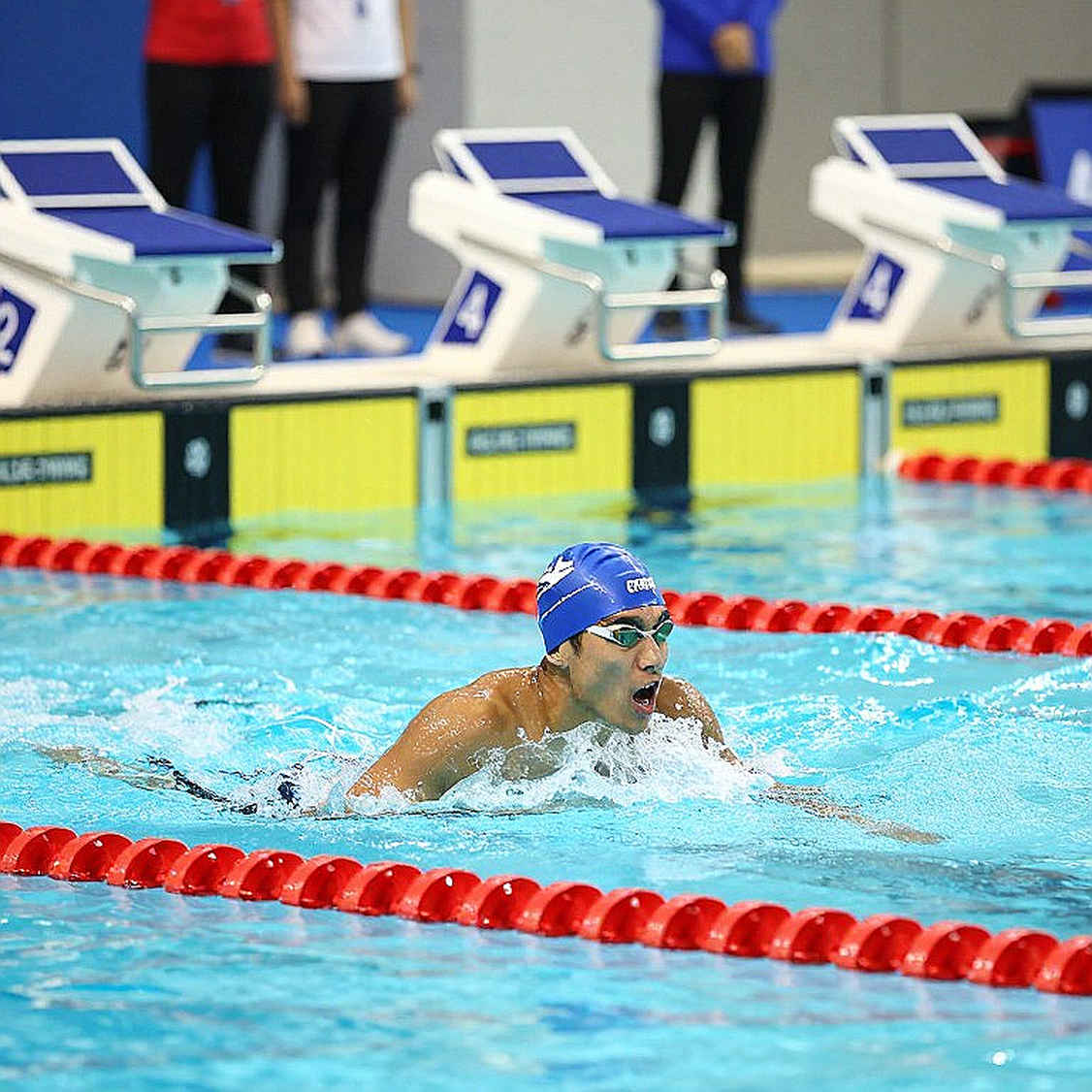
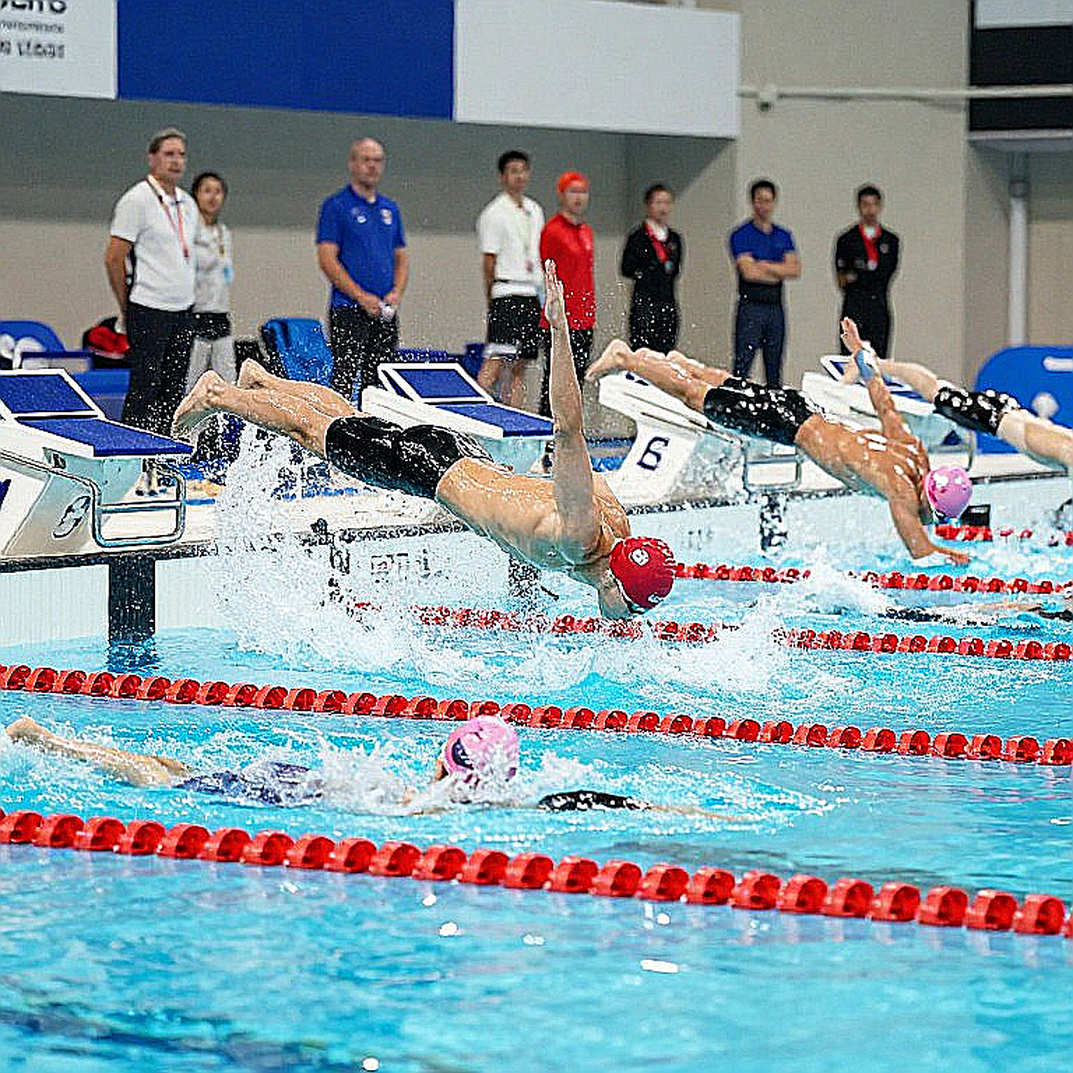
Cầu thủ liên quan
Bài đề xuất
Yusei Imaizumi breaks World Junior Record in SCM 100m breaststroke: Japan's golden prospect2026-09-05
Gui Caribe Breaks Out 45.61 Jose Finkel Trophy Meet Record For SCM 100 Free Gold2026-09-04
Sam Nauman's Path from YMCA National to NCAA Division I: In-depth Analysis of an American Swimmer's Profile2026-09-12
ASCA World Clinic 2026: The Certification Line and the Value Equation of 3 Small-Group Hours2026-09-04
Vietnamese Swimming and the Data Void Behind Every Touch of the Wall2026-09-19
Bài đề xuất
Jane Kavanagh Commits to Notre Dame: Strategic Analysis and Development Potential2026-09-06
Abi Paton's Touch of Water: A One-Second Gap Between Two Worlds2026-09-23
Jackson Kroh Commits to UC Santa Barbara for 20272026-09-06
The Men's 200m Freestyle Record Has Stood for 15 Years: The Data Chain and the Shadow of Rome 20262026-09-18
Matsushita Breaks Asian Record in 400 IM: When Movement Data Surpasses Legends2026-09-04
Bài đề xuất
Mehdy Metella Announces Retirement After 28 Years: Reflections from Olympic Silver to French National Records2026-09-05
Two Records in One Day at Jose Finkel Trophy: Leonardo Alcântara Breaks South American 800m Free Record, Gui Caribe Improves Personal Best in 50m Free2026-09-06
Inside the Swim Content Machine: When 'Insider' Status Becomes a Premium Asset2026-09-23
The Data Gap in Vietnamese Swimming: When the Analytical Model Has No Input2026-09-15
Jackson Kroh Commits to UC Santa Barbara for 20272026-09-06
Bài đề xuất
Kim Woomin Withdraws from 800m Freestyle at the 2026 Asian Games: Partial Tear of Left Shoulder Labrum and Rotator Cuff2026-09-24
Matsushita Breaks Asian Record in 400 IM: When Movement Data Surpasses Legends2026-09-04
Mission Viejo Nadadores Shuts Down 360 Performance Center: When an Elite Training Hub Dissolves Mid-Olympic Cycle2026-09-11
When the Swimming Analysis Grid Is Empty: Vietnam Is Lacking Data, Not Stories2026-09-07
Gui Caribe Breaks 45.61 Jose Finkel Trophy Meet Record For SCM 100 Free Gold2026-09-04